
Spring is one of my favorite times of year to teach science.
Not because of the seasonal crafts — but because spring is genuinely one of the richest, most naturally curious seasons for young children. Things are growing. Insects are appearing. The weather is changing. And preschoolers are wired to notice all of it.
The question is: are we giving them experiences that match that curiosity? Or are we handing them a coloring sheet with a flower on it and calling it science?
Because there’s a difference. And once you see it, you can’t unsee it.
What Real Science Looks Like in Preschool
Real science inquiry for young children doesn’t require a lab coat or a complicated setup. It really comes down to five things:
Noticing something. Wondering about it. Making a prediction. Testing it out. Talking about what happened.
That’s it. And a three or four year old can do every single one of those things — when we create the right conditions for it.
The mistake I see most often isn’t that teachers aim too high. It’s that they aim too low. They replace the inquiry with the answer. They tell children what will happen instead of letting them find out.
But here’s the thing: when a child watches colored water travel up a celery stalk and their eyes go wide — that moment of genuine surprise? That’s the learning. That’s the cognitive spark you cannot manufacture. You just have to set it up and step back.
Why Spring Is a Cognitive Goldmine
Spring gives us so much to work with — and the thinking skills we can build through spring science are the same ones we’re developing across every other part of the preschool day.
Observation. Looking closely and noticing detail.
Comparison. How is this different from that?
Prediction. What do you think will happen?
Cause and effect. What happened because of what we did?
These aren’t just science skills. They’re thinking skills. And spring is one of the most engaging, low-barrier ways to practice them.
Two Types of Spring Science Worth Knowing
I want to talk about two specific formats that serve different purposes in your classroom.
Science Centers
Science centers are your sustained, exploration-based experiences. They live in your center rotation, they work independently or in small groups, and they give children repeated time with a concept across the week.
For spring, two of my favorites are Plants and Insects.
A plants center might include a seed sort where children handle and classify real seeds, a parts of a flower tray with real or fake flowers to explore, a “draw what you see” observation activity, and a sensory tub filled with dirt or beans, garden tools, and small flowerpots. Children are playing — and they are also sorting, observing, building vocabulary, and exploring cause and effect.


An insects center works the same way. An insect or not insect sort using toy animals. A build-an-insect tray where children use rocks and craft sticks to recreate bugs from reference cards. A ladybug life cycle mat. A bug study observation station with a magnifying glass.


These are not crafts. These are structured explorations. And the difference matters for the depth of thinking that happens.
STEM Challenges
STEM challenges are more active, more social, and more problem-solving focused. They follow a simple five-step process: identify the problem, imagine solutions, make a plan, create, and then — my favorite step — make it better.
That last step teaches children something important: the first attempt is not the final answer. You try, you assess, you improve. That’s a life skill wrapped inside a science activity.
Some of my favorite spring STEM challenges:
Jelly bean structures. Can you build a 3D shape using jelly beans and toothpicks? The focus and innovation that comes out of this challenge — especially when structures fall and children try again — is remarkable to watch.


Paper bag kites. Can you build a kite with a paper bag? You decorate it, cut it, add string, and then you take it outside and run. Watching a child run across the grass holding something they built themselves is one of those preschool moments you don’t forget. And the science — gravity, wind, lift — is being experienced, not just described.
Shaving cream rain clouds. Can we make it rain in a cup? Shaving cream layered on water, food coloring dropped on top, and then children watch and wait as the color slowly pushes through and drips down. The curiosity during that waiting period is something else entirely.
Thirsty celery. Can you watch a plant drink water? Celery placed in colored water, left to sit, and then observed as the color travels up the stalk. That’s capillary action. That’s plant biology. And for a four year old who just watched a plant drink blue water — it’s one of the most memorable things they’ll do all spring.
The Thinking Hiding Underneath
Here’s what I want you to notice about all of these activities.
When a child sorts seeds, they are classifying — the same cognitive skill we develop in math and literacy centers.
When a child predicts what the shaving cream cloud will do, they are forming a hypothesis. In a preschool body. With shaving cream.
When a child’s jelly bean structure falls and they try again with a different approach, they are problem solving and self-regulating — two things we spend a lot of time trying to teach explicitly, happening organically.
When a child draws what they observe in a bug study, they’re practicing attention to detail, fine motor control, and scientific documentation all at once.
None of this is accidental. It’s why these activities are worth doing — not because they look great on Instagram, but because the thinking happening underneath the surface is significant.
How to Make It Simple
Science centers rotate in like any other center. You set them up once, add visual instructions so children can work independently, and let them run for a week or two. You don’t need to be present at the center for it to work.
STEM challenges work beautifully as a once-a-week small group experience. Gather your materials the night before, introduce the challenge card, and let children lead the process. Your job is to ask good questions — “What do you think will happen?” “Why did that fall?” “How could we make it stronger?” — and get out of the way.
You’re not performing science. You’re facilitating it. And that is a much calmer, more sustainable role.
Want Spring Science Already Built for You?
If you love these ideas but don’t have the time to create everything from scratch, I’ve got you covered.
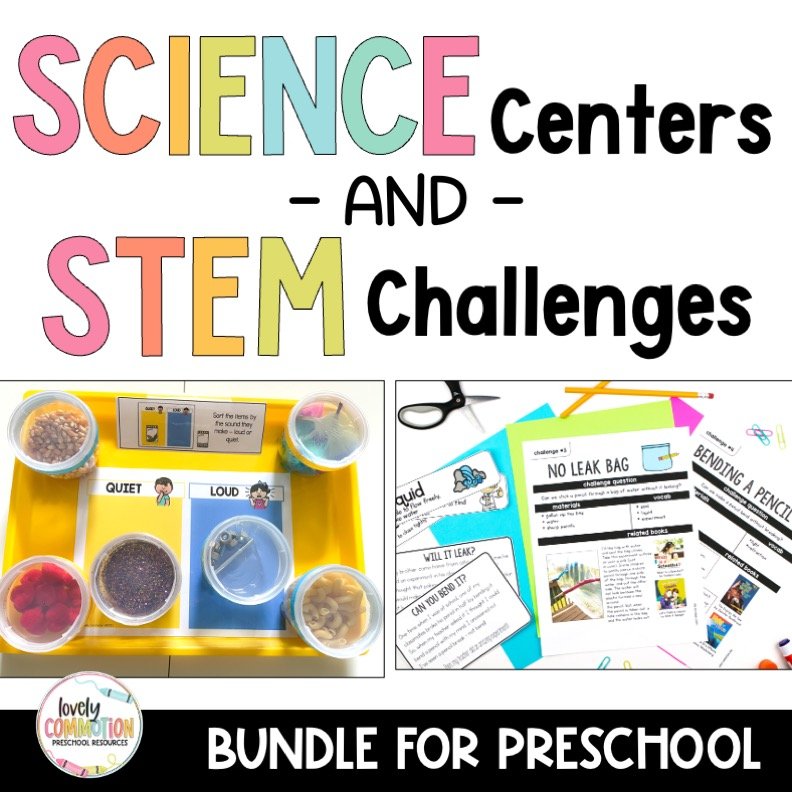
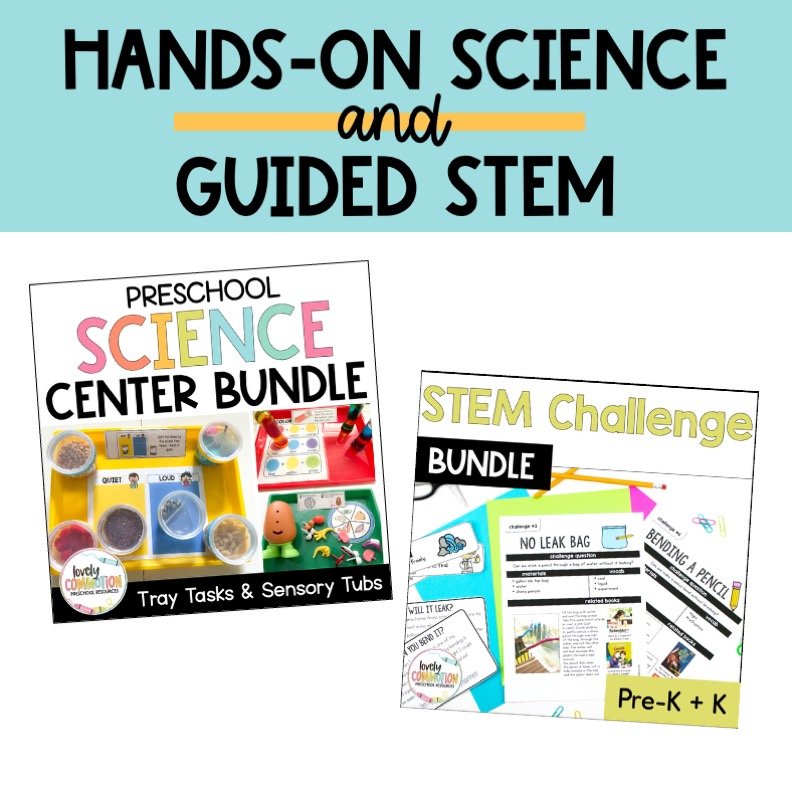
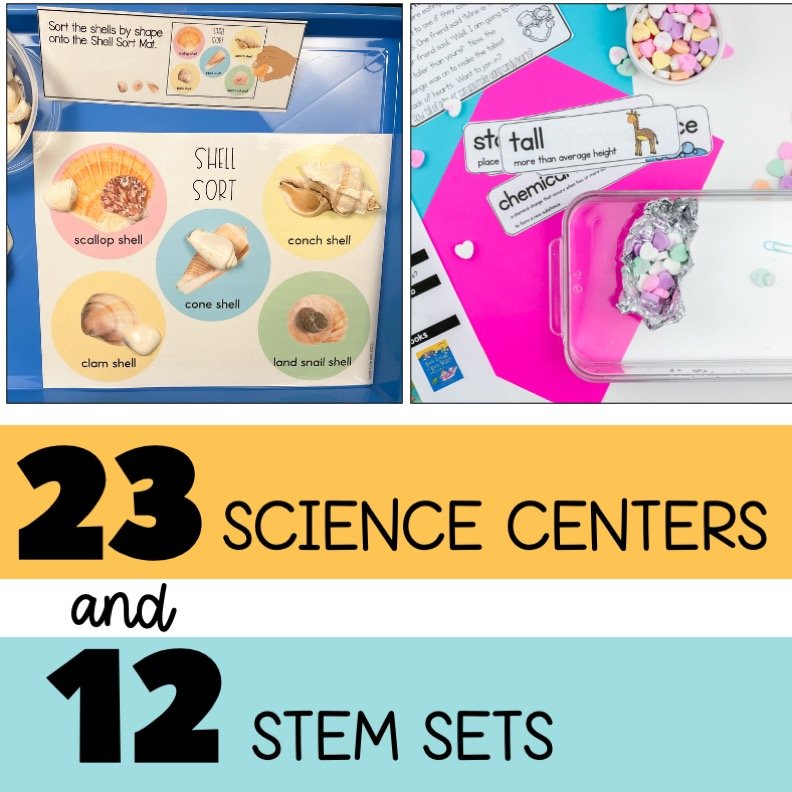
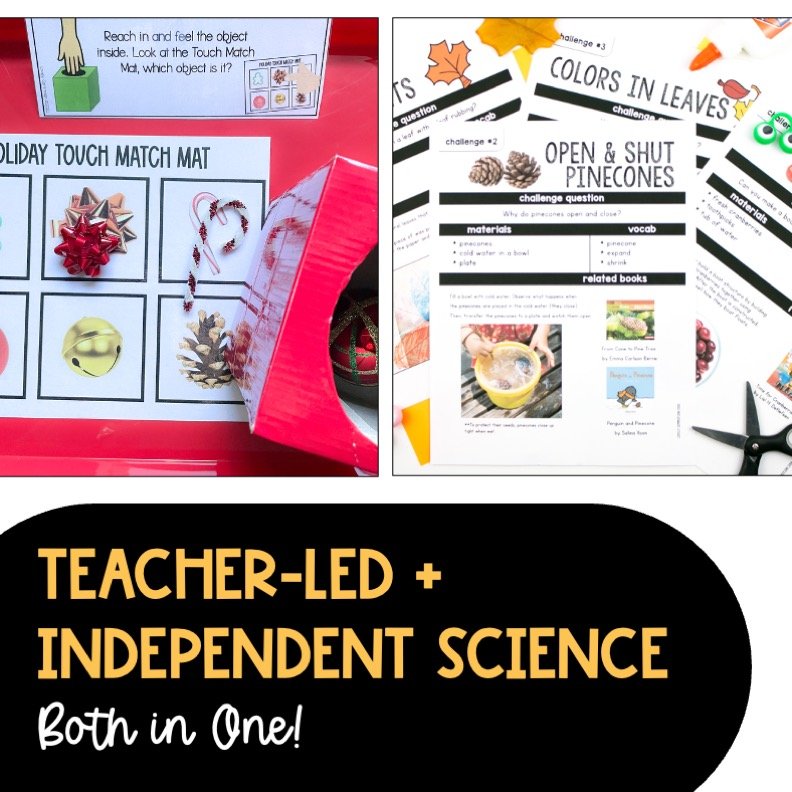
My Science Centers and STEM Challenges Bundle includes:
The Plants Science Center and Insects Science Center — each with four tray activities, visual student instructions, center posters, and printables. PLUS 21 MORE Science Centers
The April and May STEM Challenges — each with four seasonal challenges, challenge cards with story prompts, vocabulary cards, planning pages, and materials lists. PLUS 10 MORE Challenges.
Everything is easy to prep, visually clear for young learners, and designed to run independently so you can facilitate rather than manage.
It’s spring science that actually builds thinking — without adding more to your plate.
👉 Grab the Science Centers and STEM Challenges Bundle here
Spring is too good a season to spend on worksheets. Let’s make it count. 🌱
