
You’ve got one child confidently writing their full name. Another who’s still working on holding a pencil correctly. And a third who recognizes the first letter but isn’t ready to write it yet. And somehow, you’re supposed to teach name writing to all of them… at the same time? Here’s the reality: readiness for name writing varies wildly in preschool.
And that’s not a problem—that’s completely normal. In this post, we’re diving into how to scaffold name writing in preschool so every child is working at their level, building confidence without pressure, and making real progress. We’ll cover what the actual name writing progression looks like, how to build a routine that works for mixed readiness levels, and what to do when a child just isn’t ready yet.
Why Name Writing Readiness Varies So Much
First, let’s normalize something: not every child in your class is going to be at the same place with name writing. And that’s exactly how it should be. Fine motor development is on a spectrum. Some kids have the grip strength and hand control needed for writing. Others are still building those muscles.
And that’s developmental—it’s not about effort or ability. It’s about where their bodies are in the process. Name recognition comes first. Before a child can write their name, they need to know their name. They need to recognize it visually, understand that those letters belong to them, and connect the written form to their identity. If that foundation isn’t there yet, writing doesn’t make sense.
Letter recognition matters too. Kids need to understand that letters make up their name. They need to recognize their first letter, understand that it’s different from other letters, and start to see the individual pieces that form their name. And here’s something we don’t talk about enough: interest and confidence play a huge role. A child who’s excited to try will engage differently than a child who’s anxious or unsure. And both of those responses are okay—they just need different kinds of support.
So when teachers often don’t start name writing until mid-year, it’s not because we’re behind. It’s because we’re waiting for name writing readiness. We’re building the foundation—fine motor skills, name recognition, letter awareness—so that when we do introduce teaching name writing, kids are set up for success, not frustration.
The 6-Level Progression for Scaffolding Name Writing in Preschool
Let’s break down what scaffolding name writing actually looks like in practice. It’s not just “some kids trace, some kids write.” It’s a really intentional name writing progression—and the key is staying at each level until it’s truly mastered.
Level 1: Pre-writing (Building the Foundation)
This is where we build the foundation. Kids are tracing shapes, lines, and curves. They’re playing with playdough letters and doing sensory name practice. They’re pointing to their name card and recognizing their first letter. This stage is all about building the fine motor skills and control needed for pencil work. If a child isn’t here yet, we stay here. And that’s okay.

Level 2: First Letter Tracing with Verbal Formation Path
Now we start with just the first letter of their name—one letter at a time. And here’s the key: we teach a verbal formation path so they understand the motor pattern. For example, if a child’s name is Henry, we’d teach the letter H like this: “Start at the top, big line down, pick up your pencil, big line down, pick up your pencil, cross in the middle.” We trace on light grey or yellow lines—dots and dashes can actually confuse young learners. And we repeat this. Over and over. Until the motor pattern is solid. The verbal cues become the guide, and eventually, kids can say them to themselves as they write.
Level 3: First Letter Without Tracing (Within a Boundary)
Next, we move to forming the first letter independently—no tracing. But we work within a grey square boundary to help with size and placement. The boundary gives structure without the pressure of lines. And we stay here until they’ve got it. We don’t rush to the next level just because it’s been two weeks. We stay until it’s mastered.
Level 4: Tracing the Whole Name in Proper Formation
Now we trace the full name—but in traditional form: first letter uppercase, rest of the letters lowercase. This is where they learn the full visual pattern of their name. We’re still using light grey or yellow lines for support. And here’s what’s important when scaffolding name writing in preschool: we make as many copies of this page as needed. If a child needs to trace their name for three more weeks, we print three more weeks of that page. Mastery matters more than moving through a sequence.

Level 5: Writing the Whole Name Independently (With Boundary Support)
At this level, kids are writing their full name alone inside a grey rectangle. No tracing—just the boundary for guidance. This is a big confidence builder. They can see their whole name taking shape, and the rectangle keeps it organized without being too restrictive.
Level 6: Writing on Two Lines
Finally, we introduce line writing—bottom line and middle line. This is the most advanced level, and it comes last. By now, kids know the motor patterns. They’ve practiced the formation. They just need to refine placement within the lines.
So that’s the progression. And the key to all of this? You stay on the page the child needs. You don’t move them forward just because it’s February or because another child is further along. You move them when they’re ready.

How to Build a Name Writing Routine That Works for Everyone
Let’s talk about how to actually build a name writing routine that supports kids at all these different levels. Because the structure of your routine matters just as much as the materials you use.
Here’s what a strong routine for teaching name writing includes:
Consistent timing means name writing happens at the same part of the day, every day. Whether it’s morning work, small groups, or an arrival routine, predictability builds safety. Kids know when it’s coming, and they can mentally prepare for it.
Individualized materials are critical. Each child works on the page they need, not the page everyone else is on. One child might be tracing their first letter while another is writing their full name independently. And that’s exactly right. There’s no shame in being at a different level—there’s just support.
Verbal formation cues help with consistency. Use the same language every time. “Start at the top, big line down, pick up your pencil…” Consistency in your verbal cues helps kids internalize the motor pattern. Eventually, they’ll start saying it to themselves as they write.
Make copies, not excuses. If a child needs to stay on the “tracing first letter” page for three more weeks, print three more weeks of that page. Mastery matters more than moving through a sequence. This is where a lot of teachers get stuck—they feel like kids should be progressing faster. But progress is mastery, not movement.
Visual supports should always be available. Name cards for reference, even for kids who are writing independently. We’re building confidence, not testing memory. If a child needs to look at their name card while they write, that’s not cheating—that’s learning.
Celebrate progress at every level. A child who finally traces their M without going outside the lines? That’s progress. A child who writes their name in a grey box for the first time? That’s progress. Meet them where they are, and celebrate the wins along the way.
Scaffolding Name Writing Across Different Settings
In a classroom, use small group time or morning work. Have a system where each child’s current page is ready to go—page protectors, folders, or individual bins work great. You know exactly where each child is, and they practice at their level while you support or observe. At home or in a co-op, one-on-one practice means you can give full attention to verbal cues and hand-over-hand support if needed. Keep their current page in a folder and pull it out during learning time. Siblings can work side-by-side on different levels, which actually normalizes the idea that everyone’s working on what they need. In childcare settings, set up a name writing station where each child’s page is accessible. Multiple adults can support using the same verbal cues. Consistency across caregivers is key—everyone uses the same language for letter formation so kids aren’t getting mixed messages.
What to Do When a Child Isn’t Ready for Name Writing Yet
Not every preschooler is ready for name writing, even mid-year. And that’s completely okay. Signs they’re not quite ready include a pencil grip that’s still developing, very shaky lines or inability to stay within boundaries, lack of name or first letter recognition, or frustration and avoidance every time you try. What to do instead: keep building fine motor strength with playdough, tweezers, cutting with scissors, and pre-writing strokes like lines, circles, and curves. These preschool name writing activities aren’t busywork—they’re building the muscles and coordination needed for writing.
Work on name recognition by pointing to their name on their cubby, playing name games, and singing songs with their name. Help them see their name in the world around them. Build letter recognition for their first letter. “That’s your letter! That’s the letter your name starts with!” Make it exciting. Make it personal. And then? Wait. Seriously. Waiting isn’t failing them.
Here’s the mindset shift: pushing a child into name writing before they’re ready doesn’t speed up the process—it just creates frustration and damages confidence. When they are ready, they’ll move through the levels faster because the foundation is solid. Some kids won’t get to independent name writing by the end of preschool. And that’s developmentally appropriate.
Your job isn’t to force it. Your job is to build the skills, offer the practice, and celebrate the progress they make from where they started.
One Thing to Try This Week
This week, look at where each of your students actually is with name writing. Not where you think they should be. Not where the curriculum says they should be. Where they actually are. Then ask yourself: Is this child working on the right page for their level? Do I need to make more copies of the page they’re on so they can practice until it’s mastered? Am I using consistent verbal cues that help them learn the motor pattern? Am I celebrating their progress, even if it’s small?
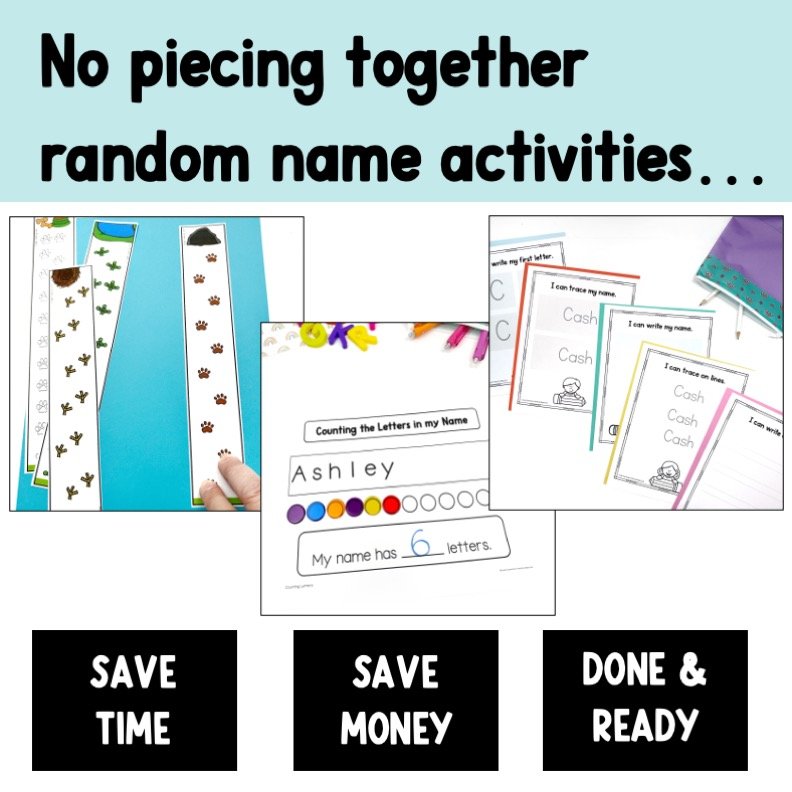
If you’re looking for a system with all these different levels ready to go, the Name Learning Bundle includes the Name Writing Notebook with every single level—from first letter tracing with grey lines, to writing within boundaries, to traditional two-line writing. It’s all editable, so you can personalize it for each child’s name. Plus, the bundle includes name recognition activities, pre-writing practice, and everything you need to build that strong foundation.

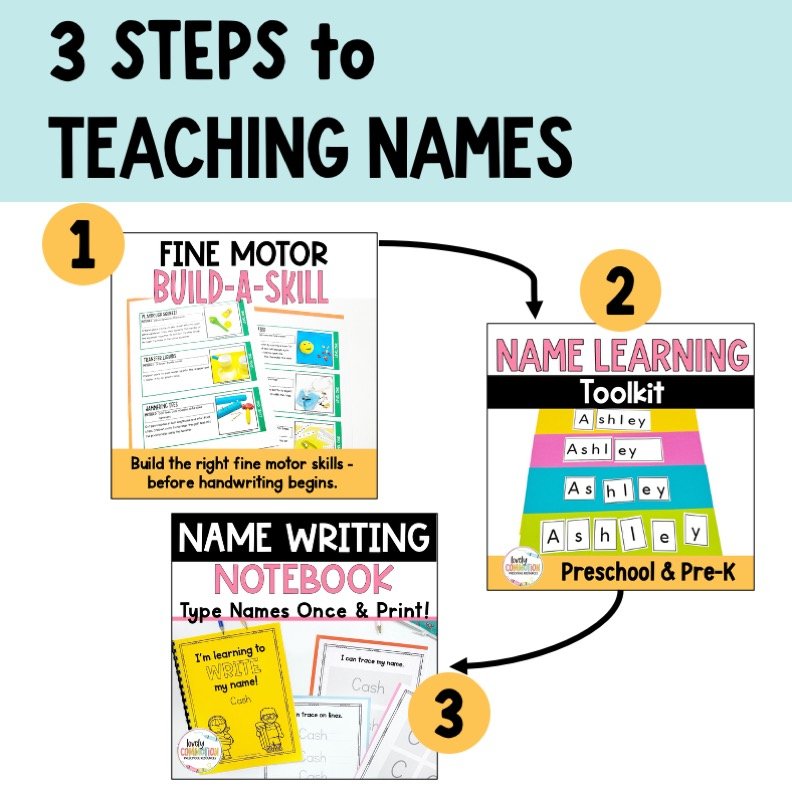
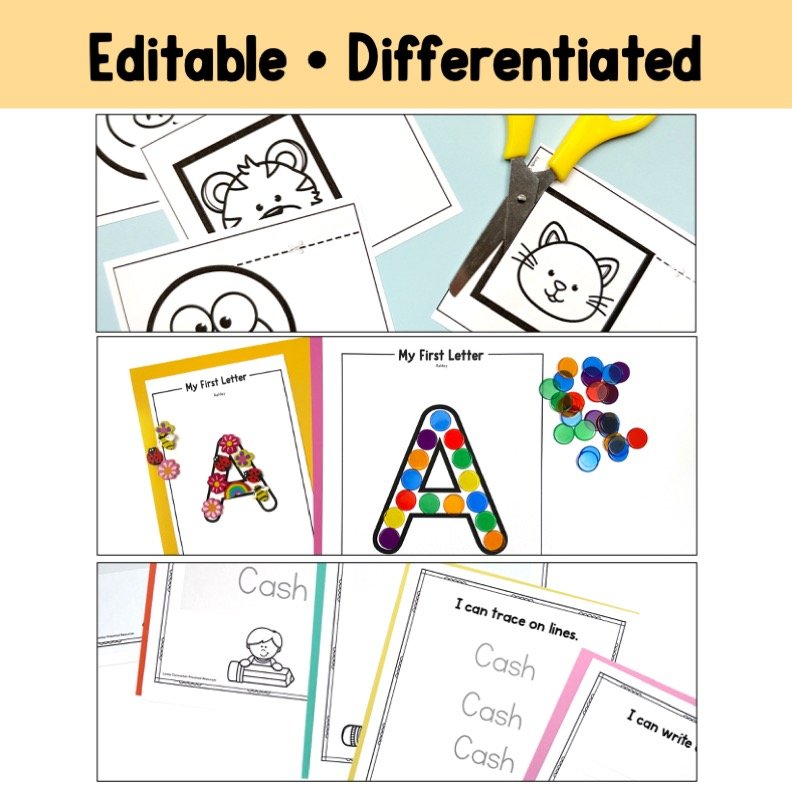
But whether you use ready-made materials or create your own, the principle stays the same: meet each child where they are, make copies of the page they need, and let them master each level before moving forward. And if you have a child who isn’t ready yet? Give yourself permission to wait. Keep building the foundation. The name writing will come when they’re ready. Scaffolding name writing in preschool isn’t about getting every child to the same place at the same time. It’s about meeting every child where they are and supporting them as they grow. Confidence comes from mastery, and mastery comes from staying at each level until it’s solid. So next time you feel pressure to move kids along faster, remember: name writing isn’t a race. It’s a scaffolded skill that every child will master at their own pace. Your job is simply to provide the support, the practice, and the celebration they need along the way.
